

Whenever you try to send money, there’s usually a fee charged. Your bank does it, and so does your regular payment channel.
When it comes to crypto, however, the fee applied is usually called a gas fee.
If you’ve ever sent crypto and wondered why the amount you’re paying is slightly higher than the amount you’re actually sending, gas fees are the reason. And as crypto becomes more mainstream, knowing how these fees work is becoming just as useful as knowing how to use your bank card.
In this guide, we’ll break down what gas fees are, why blockchains need them, how they’re calculated, and a few simple ways to avoid paying more than you need to.
What Are Gas Fees on the Blockchain?
A gas fee is basically a payment made by a crypto user to the people who help keep the blockchain running.
In a recent guide, we spoke about blockchain transactions and how they work. We explained the role of miners, who do the behind-the-scenes work of checking transactions, making sure you actually have the funds you’re trying to send, preventing double-spending, and recording transactions on the blockchain.
Well, gas fees are what these miners get in exchange for their work. After all, running powerful computers, maintaining servers, and paying for electricity isn’t exactly free.
Why Are Gas Fees Necessary?
As appealing as that sounds, blockchain networks need fees to remain secure, functional, and decentralized.
Here are some of the biggest reasons why:
- Blockchains depend on miners, and gas fees are the reward for these miners.
- Gas fees also create a financial barrier that prevents abuse of the blockchain
- Thanks to the incentives, gas fees encourage miners to keep blockchain networks secure
Gas Fee Differences Across Popular Blockchains
If you’re trying to save money on crypto transactions, the blockchain you choose can matter just as much as the time you choose to transact.
Different networks have different fee structures and levels of congestion.
Bitcoin Gas Fees
Bitcoin is generally more expensive and slower than some newer networks, but there’s a reason for that.
Bitcoin puts a huge emphasis on security and decentralization, while its block space remains limited.
- Fee Status: Generally high, ranging from $2 to $10 depending on network congestion.
- Best Use Case: Large-value transfers where security is more important than speed.
Ethereum Gas Fees
Ethereum has gone through major changes in recent years, and its main network is increasingly being used as a settlement layer while Layer 2 networks handle a lot of everyday activity.
- Fee Status: Moderate to high on Layer 1, with fees ranging from around $5 to $20 in the source figures. Layer 2 networks such as Arbitrum, Optimism, and Base can be significantly cheaper.
- Best Use Case: Complex smart contracts on Layer 1, while Layer 2 networks are often better suited for everyday trading and dApp activity.
Solana Gas Fees
Solana has become particularly popular with retail users because of its speed and extremely low transaction costs.
Its architecture allows it to process transactions in parallel, helping the network handle large amounts of activity.
- Fee Status: Extremely low, often around $0.00025.
- Best Use Case: Micropayments, gaming, and high-frequency trading.
BNB Chain Gas Fees
BNB Chain is another popular option for users who want relatively low fees while still having access to many Ethereum-compatible tools and applications.
At the same time, newer networks such as Monad and Sui are continuing to push the limits of how cheap and efficient blockchain transactions can become.
How to Reduce Your Gas Fees
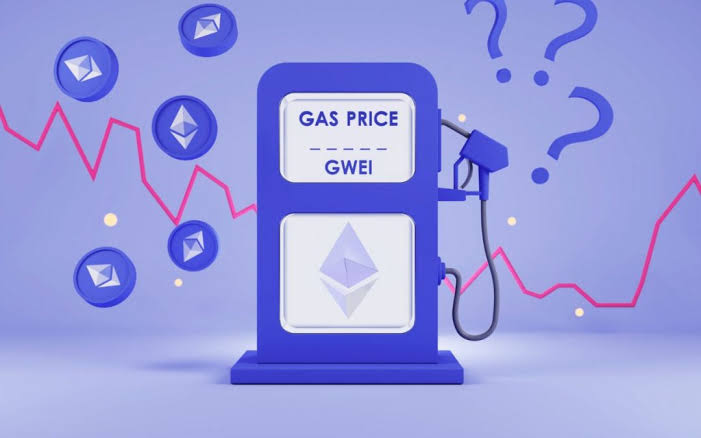
While nobody enjoys watching a chunk of their crypto disappear into transaction fees, the good news is that you often have some control over how much you pay.
Here are a few ways to keep your fees down.
1. Timing Matters
There are usually periods when fewer people are using the network, which can mean lower fees.
Historically, late nights and weekends can sometimes be cheaper, although this varies depending on the blockchain and current market activity.
Before sending a transaction, check the current gas price or use a gas tracker.
If prices are unusually high, waiting a little while could save you money.
2. Consider Layer 2 Networks
If you’re using Ethereum for everyday transactions, Layer 2 networks can be a much cheaper option.
Layer 2 networks process transactions separately and then bundle or settle them back onto Ethereum.
This allows users to share the cost of processing transactions across a large number of people.
Networks such as Base and Arbitrum are now supported by many major wallets and exchanges, making them much easier to use than they once were.
3. Use the Lightning Network for Bitcoin
If you’re sending a small amount of Bitcoin, an on-chain transaction may not always be the most efficient option.
The Lightning Network is a second-layer system built for faster and cheaper Bitcoin transactions.
It allows users to make transactions almost instantly at a fraction of the cost of a traditional Bitcoin transaction.
4. Adjust Your Gas Fee Carefully
Most modern wallets estimate the gas fee for you.
They may sometimes recommend a higher fee if you want your transaction processed quickly.
If you’re not in a hurry, you may be able to choose a lower fee.
Just be careful not to set it unrealistically low. Depending on the network and transaction, doing so could leave your transaction pending for a long time or cause it to fail.
Final Thoughts on Gas Fees
Understanding gas fees is about more than knowing why your crypto transaction costs a little extra.
It gives you a better understanding of how blockchain networks actually work.
These fees help pay the people and systems keeping the network running, discourage spam, support network security, and help blockchains prioritize transactions without relying on a central authority.
And while gas fees aren’t going away entirely, they are becoming easier to manage.